

As a therapist, I spend a lot of time helping people make sense of their emotions. We explore anxiety, sadness, irritability, overwhelm, exhaustion, motivation, relationships, trauma, and stress. But one question I often find myself asking is this:
“Have you had your hormones checked recently?”
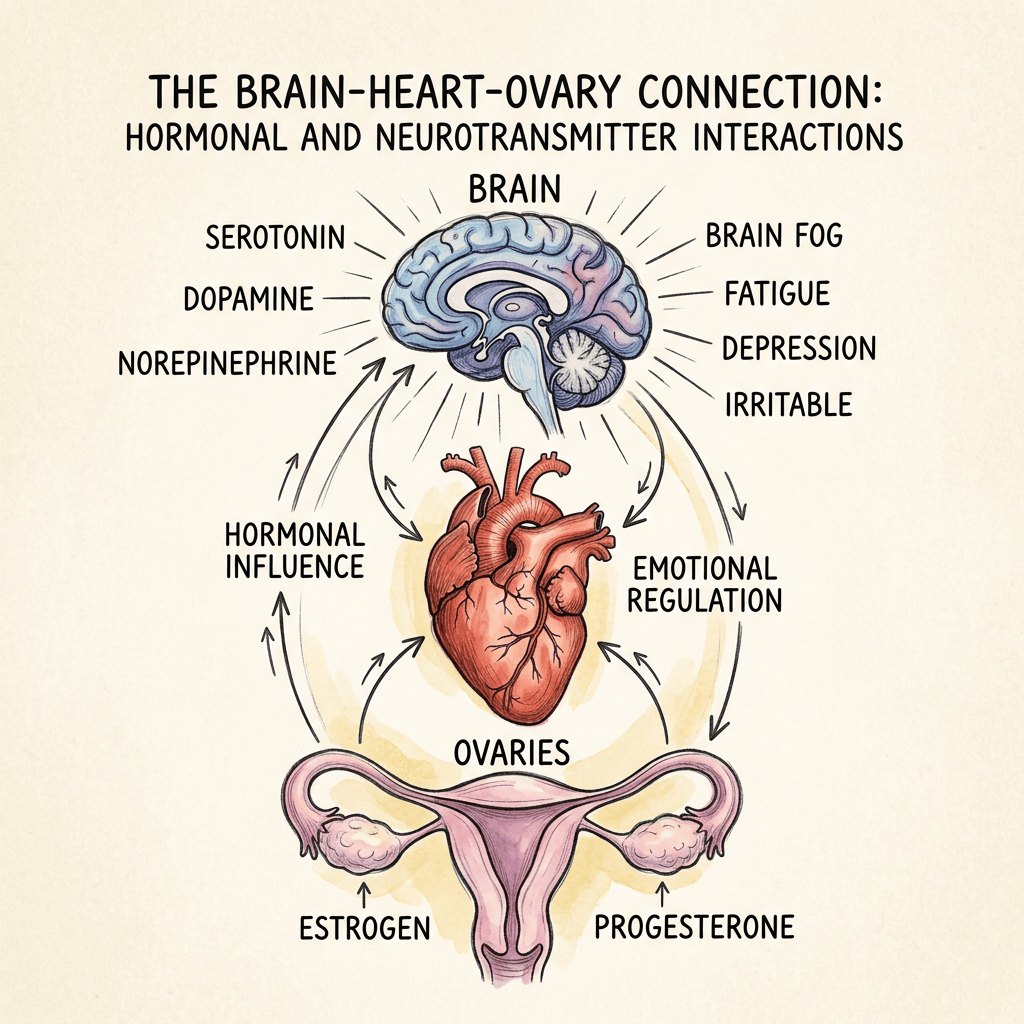
Mental health does not happen in isolation from the body. Our brains are part of our bodies, and the chemical messengers that influence mood, energy, sleep, focus, and emotional regulation are deeply connected to our hormonal systems.
When hormones are out of balance, it can look remarkably similar to anxiety, depression, burnout, ADHD, or even chronic stress. You may feel emotionally reactive, exhausted, disconnected, irritable, unmotivated, tearful, or unable to concentrate. While these experiences certainly (and often) have psychological roots, they may also be signaling that something physiological deserves attention.
“Mental health does not happen separately from the body. The brain is part of the body, and hormones are among its most influential messengers.”
Hormones such as estrogen, progesterone, testosterone, cortisol, thyroid hormones, and insulin all play important roles in how we feel emotionally. Researchers studying estrogen and mood noted that fluctuations in estrogen appear to affect brain systems involved in emotional regulation and may contribute to increased vulnerability to depression in some women. Estrogen influences neurotransmitters such as serotonin and dopamine, both of which play important roles in mood, motivation, and consequently our emotional well-being. The fluctuations of this hormone in women’s bodies can help explain some of the symptoms that present as a result. Progesterone can have a calming effect on the nervous system. Thyroid hormones affect energy, concentration, and mental clarity. Cortisol helps us respond to stress (but can create problems when levels remain chronically elevated).
This notion is particularly important during times of hormonal transition. Perimenopause, menopause, postpartum recovery, thyroid dysfunction, chronic stress, and aging can all create significant shifts in our emotional well-being. The American College of Obstetricians and Gynecologists notes that the risk of depression increases during the menopause transition, while many women also experience anxiety, irritability, sleep disruption, and cognitive changes. Many people spend months or years assuming they are “just stressed,” “getting older,” or “not coping well enough,” when their bodies are actually asking for support.
One of the most validating experiences can be discovering that there is a physiological component to what you’ve been feeling. It does not mean your emotions aren’t real. It means your body may be providing important information about what it needs.
Monitoring hormones over time can also reveal patterns. Perhaps anxiety spikes during certain phases of your menstrual cycle. Maybe mood changes coincide with fluctuations in estrogen or thyroid function. Perhaps fatigue and low motivation are connected to blood sugar regulation rather than a lack of willpower. The more information we have, the more effectively we can respond.
As therapists, we never want to reduce complex emotional experiences to a lab result. Human beings are far more nuanced than that. Our mental health is rarely purely psychological or physical. More often, it involves both. Hormones are one important part of a complex system that includes nervous system regulation, life stressors, trauma history, relationships, sleep quality, nutrition, and overall physical health. Understanding how these factors interact can provide a more complete picture of our mental well-being.
“Tracking your mood without tracking your hormones can be like trying to understand the weather while ignoring the seasons.”
If you’ve been struggling with unexplained changes in mood, energy, sleep, concentration, or emotional regulation, it may be worth also discussing it with your healthcare provider. Understanding your hormones won’t explain everything, but it may offer valuable insight into why your mind and body are responding the way they are.
Wharton, W., & Gleason, C. E. (2013). Neurobiological Underpinnings of the Estrogen–Mood Relationship. Current Psychiatry Reviews, 9(3), 247–256.
Albert, K. M., Newhouse, P. A., & Estrada, J. (2019). Estrogen, Stress, and Depression: Cognitive and Biological Interactions. Annual Review of Clinical Psychology, 15, 399–423.
Bromberger, J. T., et al. (2018). Depression During and After the Perimenopause. Obstetrics and Gynecology Clinics of North America, 45(4), 663–678.
Musial, N., et al. (2021). Perimenopause and First-Onset Mood Disorders: A Closer Look. Frontiers in Psychiatry.
Del Río, J. P., et al. (2018). Steroid Hormones and Their Action in Women’s Brains: The Importance of Hormonal Balance. Frontiers in Public Health.
Wieczorek, K., et al. (2023). Reproductive Hormones and Female Mental Wellbeing. NeuroSci.







Leave a Reply