
A woman in her 40s walks into a therapist’s or physician’s office and says something has changed.
She is anxious in a way she has never been before. She wakes up at 3 a.m. with her heart racing. She is irritable, overwhelmed, exhausted, unable to concentrate, and suddenly questioning whether she can handle a life she managed reasonably well five years ago.
Maybe she feels depressed. Maybe she cannot access motivation. Maybe her ADHD symptoms seem dramatically worse. Maybe she describes herself as “not feeling like myself.”
The mental health system has several familiar responses to these symptoms: psychotherapy, an SSRI, a stimulant adjustment, or maybe even a sleep medication. Any of those interventions may be appropriate.
But for a woman in midlife, there is another question that deserves to be asked:
What are her hormones doing?
That question is not an alternative to good mental health care. However, the research suggests that it is PART of good mental health care.
The brain is a hormone-responsive organ
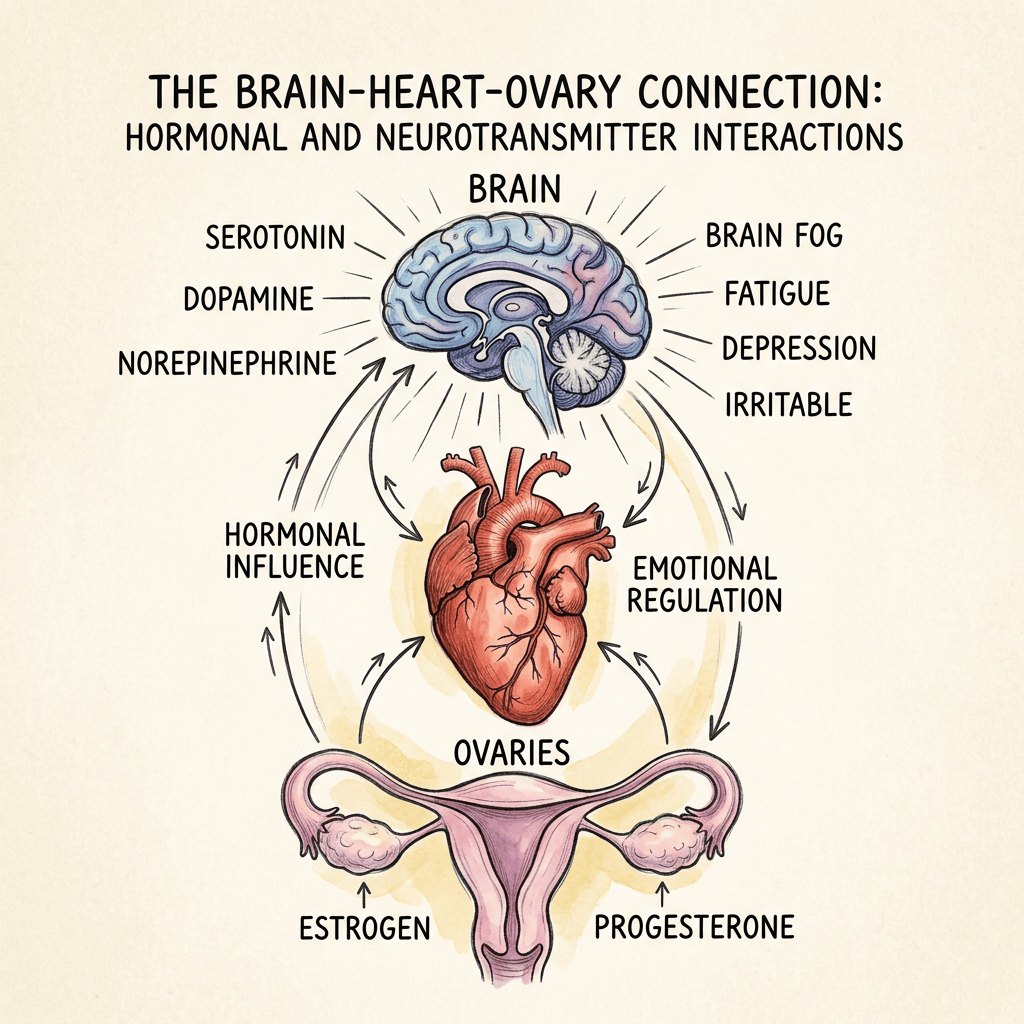
We often talk about estrogen as though its sole job is reproductive. That is not the full story. Estrogen receptors are distributed throughout brain regions involved in mood, cognition, sleep, stress regulation, memory, and emotional processing. Estradiol interacts with neurotransmitter systems including serotonin, dopamine, norepinephrine, and GABA and influences neuroplasticity and stress-response systems. This becomes particularly important during perimenopause.
Perimenopause is not simply a period of steadily declining estrogen. Ovarian hormone production becomes increasingly variable and unpredictable. Estradiol can rise dramatically and then fall. And progesterone exposure changes as ovulation becomes less consistent. For some brains, those fluctuations appear to matter considerably.
Research increasingly describes the menopausal transition as a window of vulnerability for depression and other mood symptoms. Expert guidelines on perimenopausal depression recognize that women may experience depressive episodes alongside vasomotor symptoms, sleep disruption, cognitive complaints, and significant hormonal variability. [1] This does not mean every episode of anxiety or depression in a 45-year-old woman is caused by estrogen. It does mean that automatically treating the symptoms as though ovarian physiology is irrelevant may miss an important part of the clinical picture.
We have experimental evidence that estradiol can affect depression
One of the most compelling pieces of evidence comes from randomized trials rather than simply observational reports. In a double-blind, placebo-controlled trial, Soares and colleagues studied 50 perimenopausal women with clinically significant depressive disorders. Women received either transdermal 17β-estradiol or placebo for 12 weeks. The difference was substantial. Sixty-eight percent of women receiving estradiol experienced remission of depression compared with 20% receiving placebo. [2]
Another randomized trial of women with perimenopause-related depression found significant improvements in sadness, anhedonia, and social isolation with transdermal estradiol. Importantly, improvement occurred whether or not women were experiencing hot flashes, suggesting that the mood effect could not simply be explained by women feeling better because their hot flashes disappeared. [3]
More recent evidence is more measured but continues to support a possible therapeutic effect. A 2026 systematic review and meta-analysis of 12 randomized controlled trials found menopausal hormone therapy was associated with a modest reduction in depressive symptoms compared with placebo, while also emphasizing that the overall certainty of the evidence remains limited. [4]
So hormone therapy is not a universal antidepressant…But neither is its relationship to mood merely anecdotal.
ACOG acknowledges that mood symptoms are common during perimenopause and that depression risk increases during the menopausal transition. It also notes that estrogen treatment may help depression during perimenopause in some women. [7]
That creates an important clinical question: Before escalating psychiatric treatment for a midlife woman whose symptoms appeared or dramatically worsened during the menopause transition, have we adequately assessed whether the menopause transition itself is contributing?
This is not an argument against psychiatric medication and this distinction matters.
Antidepressants save lives. Stimulants can dramatically improve functioning in people with ADHD. Psychotherapy can change relationships, behavior, emotional regulation, and quality of life.
And current expert guidance still recognizes established depression treatments including antidepressants and psychotherapy as front line treatments for clinically significant perimenopausal depression. Estrogen is not FDA-approved specifically as a treatment for depression. [1]
Hormone therapy also has contraindications and risks and must be individualized according to a woman’s medical history, age, menopausal stage, symptoms, route of administration, dose, and other risk factors. Major menopause guidelines emphasize individualized risk-benefit assessment rather than universal hormone treatment. [8]
The point, therefore, is not:
“Women should take hormones instead of psychiatric medication.”
The better question is:
“Are we treating the whole biological context in which these psychiatric symptoms emerged?”
Sometimes the answer may be psychotherapy.
Sometimes it may be an antidepressant.
Sometimes hormone treatment may be clinically appropriate.
Sometimes it may be a combination.
And sometimes a woman who has spent several years believing her brain has inexplicably stopped working may discover that there is a physiological reason this particular season of life feels so different.
Perimenopause changes the clinical formulation
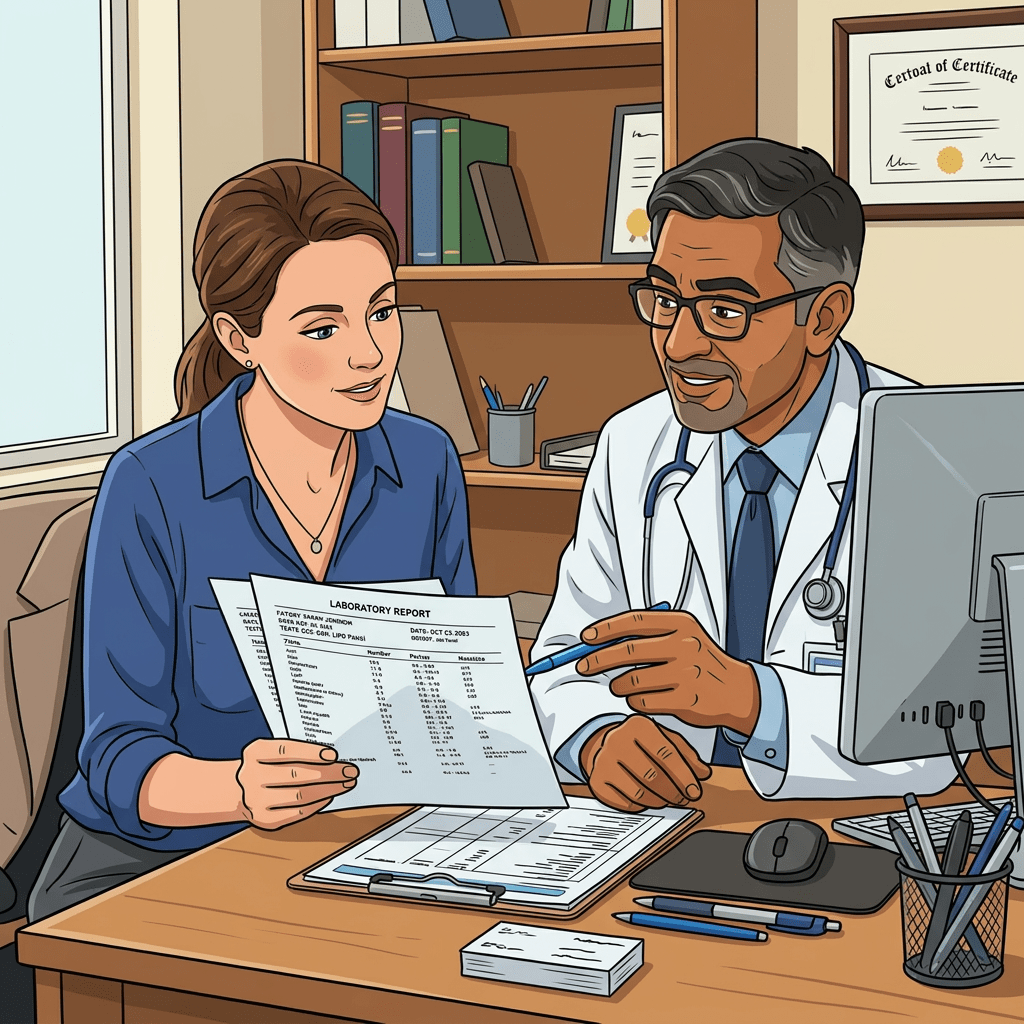
As a psychotherapist, I find this particularly important because symptoms do not exist independently of physiology. We would not ignore thyroid dysfunction in a patient presenting with depression and fatigue. We would not dismiss severe sleep apnea while repeatedly increasing medication for poor concentration. Hormonal transitions deserve similar clinical curiosity. Psychotherapy asks us to understand what is happening psychologically and relationally. Good medicine asks what is happening biologically. For women in midlife, we often need both.
References
1. Maki PM, Kornstein SG, Joffe H, et al. Guidelines for the evaluation and treatment of perimenopausal depression: summary and recommendations. *Menopause.* 2018;25(10):1069–1085. doi:10.1097/GME.0000000000001174.
2. Soares CN, Almeida OP, Joffe H, Cohen LS. Efficacy of estradiol for the treatment of depressive disorders in perimenopausal women: a double-blind, randomized, placebo-controlled trial. *Archives of General Psychiatry.* 2001;58(6):529–534. doi:10.1001/archpsyc.58.6.529.
3. Schmidt PJ, Nieman L, Danaceau MA, et al. Estrogen replacement in perimenopause-related depression: a preliminary report. *American Journal of Obstetrics and Gynecology.* 2000;183(2):414–420. doi:10.1067/mob.2000.106004.
4. *Efficacy and safety of menopausal hormone therapy for depressive symptoms in perimenopausal women: A systematic review and meta-analysis.* *Journal of Affective Disorders.* 2026. The analysis included 12 randomized controlled trials and found a modest improvement in depressive symptoms with hormone therapy compared with placebo, while rating the evidence as limited in certainty.
5. Schmidt PJ, Ben Dor R, Martinez PE, et al. Effects of estradiol withdrawal on mood in women with past perimenopausal depression: a randomized clinical trial. *JAMA Psychiatry.* 2015;72(7):714–726.
6. Gordon JL, Rubinow DR, Eisenlohr-Moul TA, Xia K, Schmidt PJ, Girdler SS. Efficacy of transdermal estradiol and micronized progesterone in the prevention of depressive symptoms in the menopause transition: a randomized clinical trial. *JAMA Psychiatry.* 2018;75(2):149–157. doi:10.1001/jamapsychiatry.2017.3998.
7. American College of Obstetricians and Gynecologists. *Mood Changes During Perimenopause Are Real. Here’s What to Know.* ACOG. Published April 2023; reviewed February 2025.
8. The North American Menopause Society. The 2022 hormone therapy position statement of The North American Menopause Society. *Menopause.* 2022;29(7):767–794. Hormone therapy should be individualized according to indication, age, timing, formulation, route, and individual risk factors.
This article is for educational purposes and is not intended to diagnose or treat a medical condition or recommend starting, stopping, or changing hormone or psychiatric medication. Decisions about menopausal hormone therapy and psychiatric medications should be made with appropriately qualified healthcare professionals based on individual symptoms, medical history, risks, and treatment goals.





Leave a comment